
Last updated November 18, 2026






Free written scope consultation - allowances, timeline, and change-order rules on paper before a single trade is scheduled
Construction Warning Signs: A Sunnyvale Homeowner’s Reference Guide
The most expensive construction problems rarely announce themselves. They whisper first. A hairline crack that widens a little each season. A door that sticks in July and swings free by October. Granules collecting in a gutter that looks fine from the sidewalk. By the time a crack is obvious or a leak is dripping into a bucket, the repair has usually grown a zero or two. That’s the counterintuitive part: the warning signs almost always arrive months before the damage, and most homeowners don’t know what to look for. This guide trains you to read those early signals in the way Sunnyvale homes are built, aged, and stressed by their soil and setting, so you can act while the fix is still small.
Quick Answer
The key construction warning signs in a Sunnyvale home are stair-step cracks in exterior stucco, doors and windows that bind or swing unevenly, garage slab separation, granule deposits in gutters, daylight at the ridge cap, and moisture signals like bubbling paint at baseboards. Signs that are actively changing, widening, or appearing alongside one another justify a professional evaluation right away; isolated, stable marks can usually be monitored on a set schedule. The difference between cosmetic settling and structural movement comes down to measurement, pattern, and whether it’s progressing.
Styles & brands we work with
- Kitchen remodeling
- Bathroom remodeling
- Home additions & ADU
- Roofing
- Windows & doors
- Driveway & pavers
- Fence
Table of Contents
- Why Sunnyvale’s Clay Soil and Seismic Setting Drive Warning Signs
- Foundation and Stucco Warning Signs Specific to Sunnyvale
- Roof Warning Signs Most Homeowners Miss
- Cosmetic Settling vs. Structural Movement: Where the Line Is
- Interior Moisture Signs That Come Before Mold and Rot
- Which Warning Signs Need a Professional Now vs. a Monitoring Period
- A Decision Framework You Can Use This Weekend
- Common Mistakes to Avoid
- When to Call a Professional
- Frequently Asked Questions
Why Sunnyvale’s Clay Soil and Seismic Setting Drive Warning Signs
Sunnyvale sits on expansive clay soil, and that single fact explains most of the movement you’ll ever notice in a South Bay home. Clay swells when it takes on water and shrinks as it dries. Through a mild, wet winter and a long, dry summer, the ground under a foundation cycles between those two states, and a house sitting on top of it rides that cycle year after year. The result isn’t usually dramatic collapse. It’s slow, uneven seasonal movement that shows up first at the edges and corners of the structure.
Layer seismic activity on top of that. The South Bay is earthquake country, and even small tremors can nudge a house that’s already carrying a little movement in its framing. Neither clay soil nor seismic movement means your home is in danger. But together they mean Sunnyvale homes tend to show movement signals earlier than homes built on rock or stable sand, and those signals are worth reading correctly.
What does that look like in practice? A few patterns repeat in Sunnyvale neighborhoods:
- Movement that clusters at one corner. Soil moisture varies across a lot depending on drainage, tree roots, and how water runs off the roof. When one corner cycles more than the others, the cracks cluster there.
- Seasonal rhythm. Doors and windows that bind most in late summer, when clay is driest and shrunk, are telling you the foundation is moving with the soil.
- Older and newer homes behaving differently. Homes built in different eras used different foundation details, so the same soil produces different symptoms.
Understanding that clay is behind much of what you’ll see keeps you from panicking over normal seasonal behavior and, more importantly, from ignoring the patterns that cross into something real. If your driveway is also heaving, cracking, or separating from the garage, that’s a related signal worth pairing with a look at our driveway & pavers guidance, since hardscape and foundation often tell the same story.
Foundation and Stucco Warning Signs Specific to Sunnyvale
Exterior stucco is the best early-warning surface on most Sunnyvale homes. It’s brittle, it’s bonded to the walls, and when the structure underneath moves, the stucco cracks. The trick is knowing which cracks talk.
The single most important pattern to recognize is the stair-step crack. On a home with a masonry or block foundation wall, a crack that steps diagonally like a staircase across the mortar joints is a classic sign of differential movement: one side of the foundation is settling or heaving more than the other. On a stucco wall over a wood-frame house, you’ll often see the same diagonal pattern in the stucco itself. Diagonal cracks are meaningful because they follow the direction of movement, and they tend to widen over time if the cause is active.
Second on the list is garage slab separation. Look at the joint where the garage floor slab meets the stem wall or the house. A small, even gap that’s been there since the home was built isn’t news. A gap that’s growing wider, or a slab that’s visibly dropped or tilted away from the wall, tells you the soil under the slab is moving. That joint is one of the first places movement shows up because the slab is thin and lightly supported compared to the foundation.
Third are the door and window binding patterns:
- Pick three or four interior doors and open and close them fully. Note any that rub the frame or latch only with effort.
- Repeat the same check at the exterior doors and windows.
- Write down the date and which openings bind.
- Re-check in a few months. If the binding has moved to different openings, or gotten worse, the structure is shifting, not just settling.
Horizontal cracks in a foundation wall, bowing walls, and cracks wider than a quarter inch are in a different category and deserve a professional look promptly. A trained eye can tell whether the cause is soil, drainage, a nearby tree, or something seismic, and that distinction drives the fix.
Roof Warning Signs Most Homeowners Miss
Homeowners learn to scan for missing shingles, and that’s fine as far as it goes. But shingle loss is a late signal. The earlier, more useful signs are subtler, and a few of them live in places most people never check.
Granule deposits in the gutters. Asphalt shingles shed mineral granules throughout their life, but a heavy accumulation of grit in the gutters, or granules collecting at the base of downspouts, means the shingle surface is breaking down faster than normal. On a GAF, CertainTeed, or Owens Corning roof, granule loss at that rate is the shingle telling you it’s aging out.
Daylight at the ridge cap. Get into the attic on a bright day and look at the ridge line from underneath. Daylight coming through at the peak usually means a ridge cap problem or failing flashing, and that’s a leak waiting for the next storm. While you’re up there, look for:
- Water stains or dark streaks on the rafters or sheathing
- Sagging decking between the rafters
- Sunlight at the ridge or at any penetration where vents or pipes come through
- Damp or rusted fasteners near the ridge
Sagging visible from inside. A roofline that dips or waves when you look at it from the street, or decking that sags between rafters from the underside, points to a structural issue, not a cosmetic one. That’s worth a look even before the next wet season.
Sunnyvale’s mild winters don’t stress roofs the way a snow climate would, but a long dry summer followed by winter rain still finds every weak point. That’s why a roof nearing the end of its service life should be assessed before the rains arrive, not after a leak appears. If roofing work is on your list alongside other exterior projects, it’s worth understanding how much a single contractor can cover at once; our Construction Sunnyvale overview shows the full scope.
Cosmetic Settling vs. Structural Movement: Where the Line Is
Every house settles. Newer Sunnyvale homes settle as the soil under them compacts, and older homes have been settling for decades. The question separating cosmetic from structural comes down to three measurements: width, progression, and pattern.
Width. A hairline crack up to about a sixteenth of an inch is usually cosmetic, especially if it’s vertical and in a non-structural surface like stucco or drywall. Cracks approaching a quarter inch, or any that are wider at one end than the other (a “V” shape), are worth a professional look.
Progression. This is the one homeowners skip. Take a photo of any crack with a ruler taped next to it, dated. Re-shoot it three or four months later. A crack that hasn’t changed is a settled matter. A crack that has grown by even a sixteenth of an inch is active, and active means the cause hasn’t resolved.
Pattern. A single isolated crack in one spot is different from a network of cracks on multiple walls, or a crack that pairs with door binding and a slab gap. When signals appear together, they corroborate each other and point to real movement.
A quick way to score what you’re seeing:
- Measure and photograph every crack that concerns you.
- Note its shape: vertical, horizontal, or diagonal/stair-step.
- Check whether openings near the crack bind.
- Look for a matching crack on the inside of the same wall.
- Repeat in three months and compare.
If a crack is stable, narrow, and isolated, monitor it. If it’s wide, widening, diagonal, or accompanied by binding and slab separation, it’s structural territory and worth a professional evaluation. Getting that read early is far less expensive than waiting for a failure. Our home additions & ADU team sees these patterns up close before building on top of existing foundations, and it’s a good reminder that knowing your foundation’s condition pays off in any major project.
Interior Moisture Signs That Come Before Mold and Rot
Water damage rarely starts with a visible stain. It starts with quiet signals that a wall, a floor, or a cabinet is taking on moisture. Learn those and you’re ahead of the problem by months.
Bubbling or peeling paint at baseboards. Paint lifts and blisters when the drywall behind it is holding moisture. If you see this along a baseboard, especially on a wall below a bathroom or next to a slab-on-grade floor, water is getting in somewhere above or behind.
Soft spots under tile. Press on a tile floor near a shower, toilet, or sink. A slight give or a hollow, crunchy feel underfoot means the subfloor has been wet. Tile over a wet subfloor will eventually crack or come loose.
Condensation patterns on walls. Windows and walls that bead up with condensation in specific spots, rather than uniformly, suggest warm moist air is meeting a cold surface, which often points to an air leak or insulation gap.
Musty smell in a closed room. A damp smell that lingers in a bathroom, closet, or laundry area after cleaning is a reliable early signal. Trust your nose before your eyes.
Fine dark specks at grout or caulk lines. This is the leading edge of mold, and it means the surface has stayed wet long enough to support it. Fix the moisture source, not just the specks.
In a Sunnyvale bathroom or kitchen that’s seen years of use, these signs are often the trigger for a remodel rather than a small repair. If the fixtures are aging anyway, our fence installation team’s reminder applies here too: moisture problems don’t stay where they start, and fixing them at the source is the only fix that lasts. When a bathroom or kitchen has crossed from a patch to a rebuild, the earlier you catch it, the more of the room’s good structure you get to keep.
Which Warning Signs Need a Professional Now vs. a Monitoring Period
Here’s the part most “warning sign” lists skip: not every signal means call today. Some mean photograph it and watch. There’s a real difference, and getting it right saves money in both directions.
Call for an evaluation immediately if you see:
- Any crack wider than a quarter inch, or one that’s sharply V-shaped
- Horizontal cracking in a foundation or retaining wall
- A wall that’s visibly bowing or leaning
- A garage slab that has dropped or tilted away from the house
- Daylight through the ridge cap or active attic leaks
- Multiple signals appearing at once: a diagonal crack plus binding doors plus slab separation
- Sagging roofline or sagging decking from inside the attic
Start a monitoring period if you see:
- A single hairline vertical crack under a sixteenth of an inch, isolated to one wall
- A door or window that binds only in the driest months and frees up in wetter ones
- Light granule deposits in a gutter on a roof near its mid-life
- Paint bubbling at one isolated baseboard with no other moisture signs
For the monitoring group, take dated photos, note the measurements, and check again in three to four months. If anything has grown, shifted, or paired with a new signal, move it to the “call immediately” list. That schedule turns guesswork into a clear decision, and it gives any professional you consult a useful record of how the problem has behaved over time.
A Decision Framework You Can Use This Weekend
Set aside an afternoon and do a full pass around the house. Here’s the order that catches the most:
- Walk the exterior at ground level. Note every crack in stucco or foundation. Photograph each with something for scale.
- Check the garage joint. Look at the slab-to-wall line and note any gap.
- Test the openings. Open and close every exterior door and window and note binding.
- Get into the attic. On a bright day, look for daylight, stains, and sagging decking.
- Scan the gutters and downspouts. Note granule accumulation and any grit at the outlets.
- Walk the interior perimeter at baseboard height. Look for bubbling paint, stains, dark specks, and soft flooring.
- Write it all down and date it. This record is your baseline.
Then schedule the next pass in three to four months and compare. This is the single most useful habit a homeowner can build, because it separates an active problem from a settled one before the problem gets expensive. If a signal has crossed into “call immediately” territory at any point, don’t wait for the next pass.
Common Mistakes to Avoid
- Patching a crack without measuring it. If you fill or caulk a crack before you’ve measured and photographed it, you’ve erased your evidence and the next sign shows up somewhere worse. Record it first, then repair.
- Treating a seasonal binding door as a framing failure. Sunnyvale’s clay cycles through wet and dry seasons, and a door that binds in late summer and frees up in winter is telling you about the soil, not the framing. Watch it across a full cycle before drawing conclusions.
- Ignoring the attic. Daylight at the ridge and sagging decking are among the most useful early signals you’ll ever get, and they live in a space most homeowners never enter. Get up there twice a year.
- Cleaning granules out of the gutter and moving on. Clearing the gutter solves the clog, not the shingle. If granules keep collecting, the roof is aging and needs an assessment.
- Assuming a garage slab gap is always cosmetic. A small, even gap can be normal. A growing gap or a tilted slab is not, and it often precedes bigger foundation signals.
- Waiting for visible mold before fixing a moisture source. The mold is the result, not the cause. Bubbling paint and soft subfloor are the earlier, cheaper-to-fix signals.
- Calling a plumber or roofer when the real question is structural. If cracks, slab separation, and binding doors appear together, the right first call is someone who can read the whole house, not one trade in isolation.
When to Call a Professional
Call us when a warning sign has crossed the line from stable to active: a diagonal or stair-step crack that’s widening, a garage slab separating or tilting, binding doors that have migrated across the house, daylight at the ridge, sagging decking, or interior moisture signs that point to a source you can’t find. Call when several signals appear together, because that combination is the clearest structural story. And call if you simply aren’t sure, since a professional read is far cheaper than an ignored problem. Construction Sunnyvale offers free estimates in Sunnyvale. We work across roofing, windows and doors, fencing, driveways and pavers, bathrooms, kitchens, and additions, so one visit can assess the signals in context. Call (888) 255-9137. We answer 24/7. Fast dispatch from 7am to 7pm, Sunday through Friday.
Frequently Asked Questions
The most important early signs are stair-step or diagonal cracks in exterior stucco, growing separation at the garage slab joint, doors and windows that bind, granule deposits in gutters, and daylight at the ridge cap. When two or more of these appear together, they corroborate each other and justify a professional look. Call (888) 255-9137 for a free estimate if you see a combination.
The line comes down to width, progression, and pattern: cracks wider than a quarter inch, cracks that keep growing, or a web of cracks paired with binding doors and slab separation point to structural movement. Isolated hairline cracks that stay put are usually cosmetic. When in doubt, a free evaluation sorts it out. Call (888) 255-9137.
Doors and windows usually bind in Sunnyvale because the clay soil beneath the foundation swells and shrinks with the seasons, tilting the structure slightly. Binding that comes and goes with the weather points to soil movement; binding that’s ongoing and has spread to other openings points to active movement. Call (888) 255-9137 for an assessment if it’s getting worse.
No, a single hairline vertical crack is usually cosmetic, but a diagonal or stair-step crack, or one wider at one end, is a meaningful sign of differential movement and should be evaluated. Photograph and measure it first so you have a baseline. Call (888) 255-9137 for a free look.
Heavy granule deposits in gutters mean the asphalt shingle surface is breaking down faster than normal and the roof is aging out. It’s an early signal that shows up long before a leak, which makes it valuable. Call (888) 255-9137 for a roof assessment before the wet season.
Get an evaluation right away when a crack is wide or widening, a wall is bowing, the garage slab has dropped, or daylight shows at the ridge, and monitor when a single hairline crack or a seasonal binding door is stable. If you’re unsure which category you’re in, a free estimate resolves it. Call (888) 255-9137.
The Bottom Line

Construction problems in Sunnyvale homes give you a long runway of warning before the expensive stage. The clay soil and seismic setting here make movement signals show up earlier than in many places, and those signals are readable if you know what to look for. Watch for stair-step stucco cracks, garage slab separation, binding openings, granule deposits, daylight at the ridge, and moisture signs before your eyes catch them. Then apply the decision framework: measure, date, and re-check, and call when the pattern is active or paired. Getting a free estimate early is the whole point of this guide. Call (888) 255-9137. We answer 24/7. Fast dispatch from 7am to 7pm, Sunday through Friday. Our technicians have up to 10 years of experience reading exactly these signals.
Written by the team at Construction Sunnyvale.
See the difference
 Before
 After
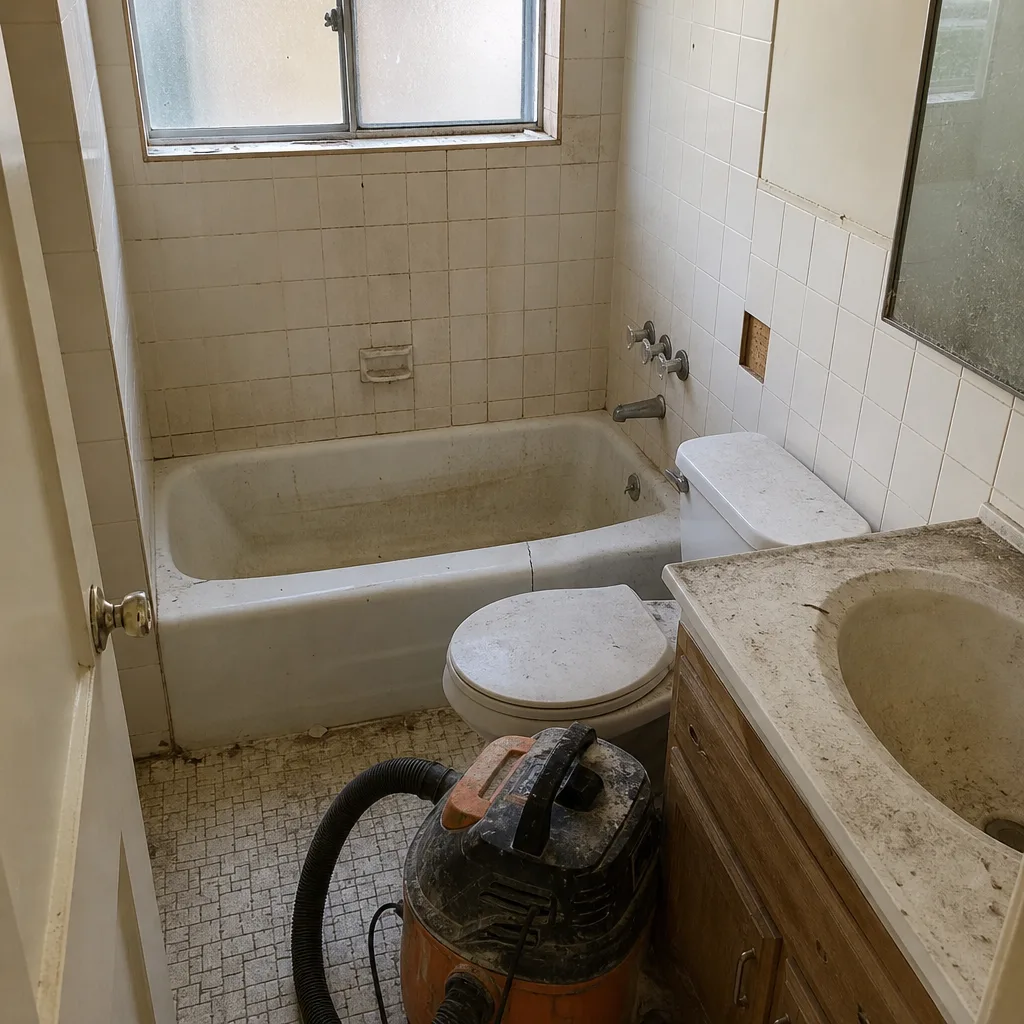 Before
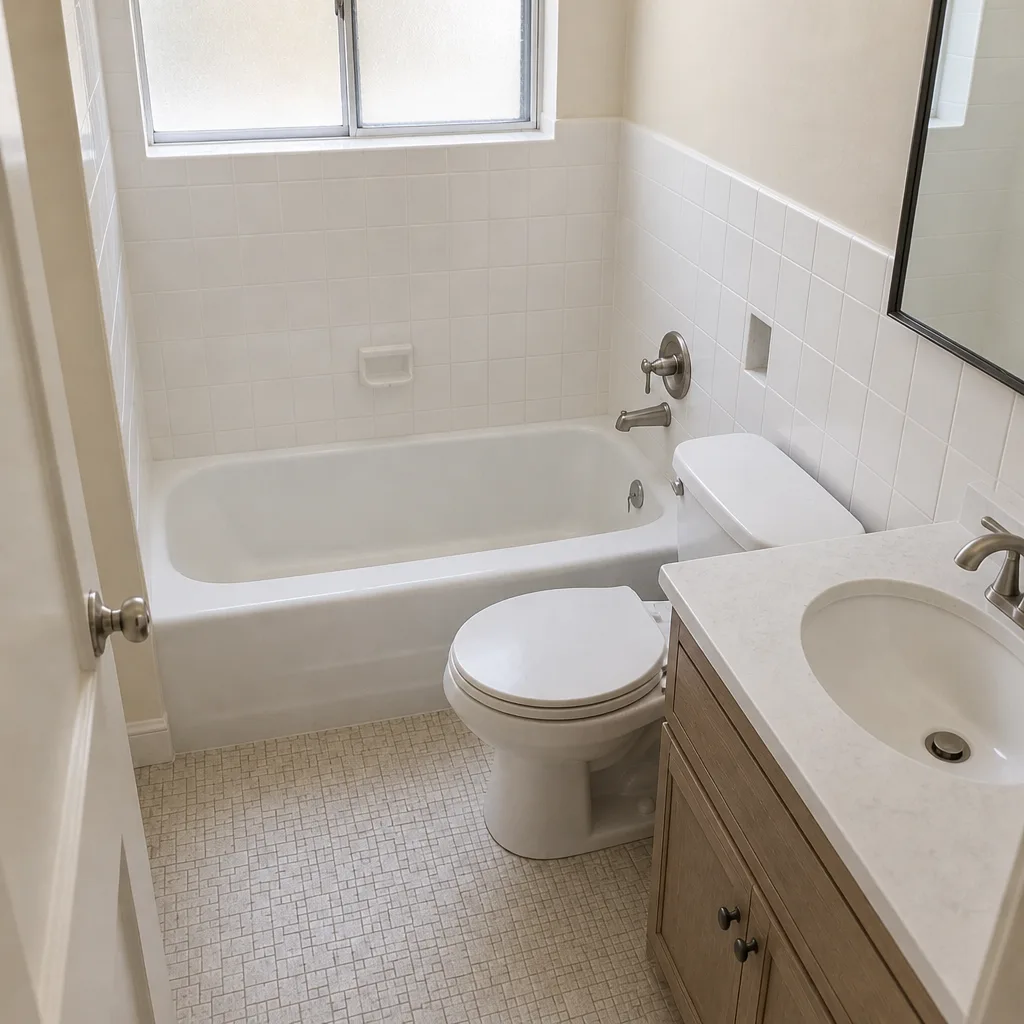 After
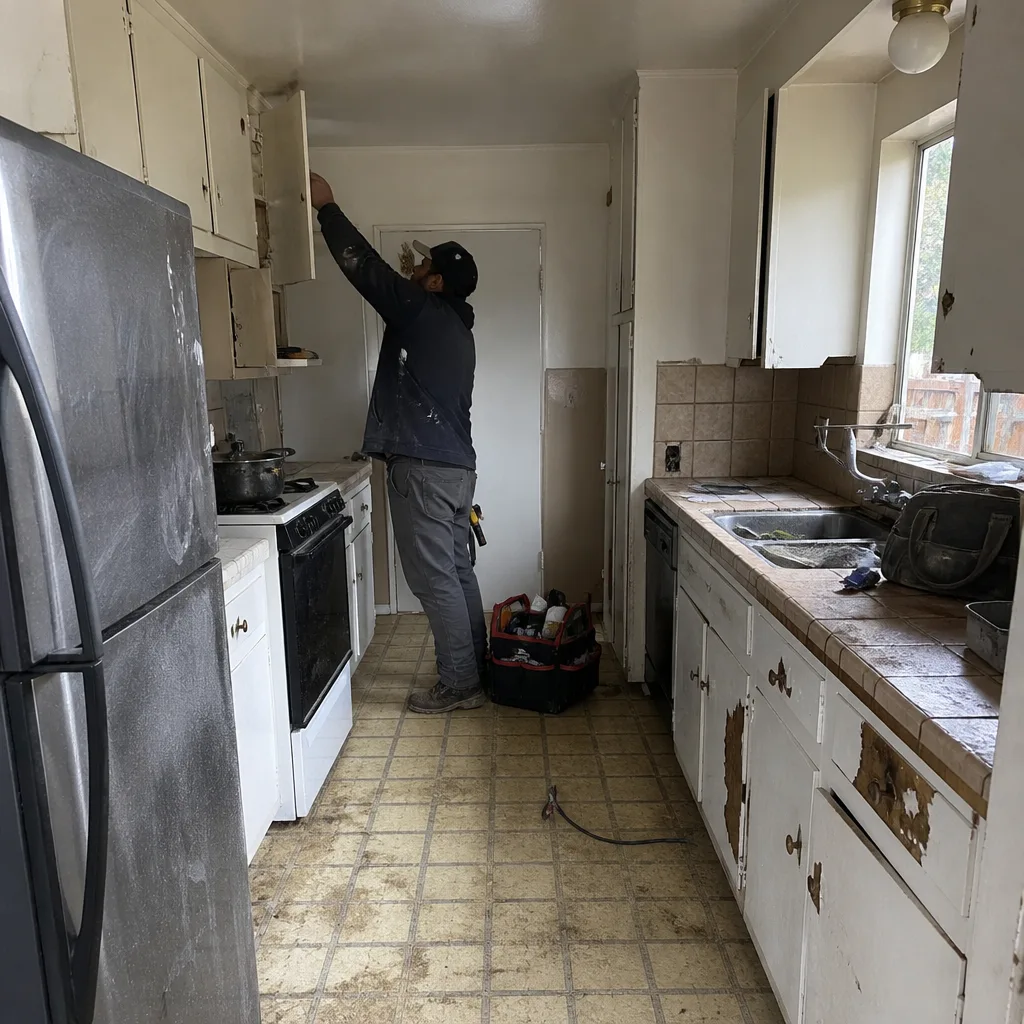 Before
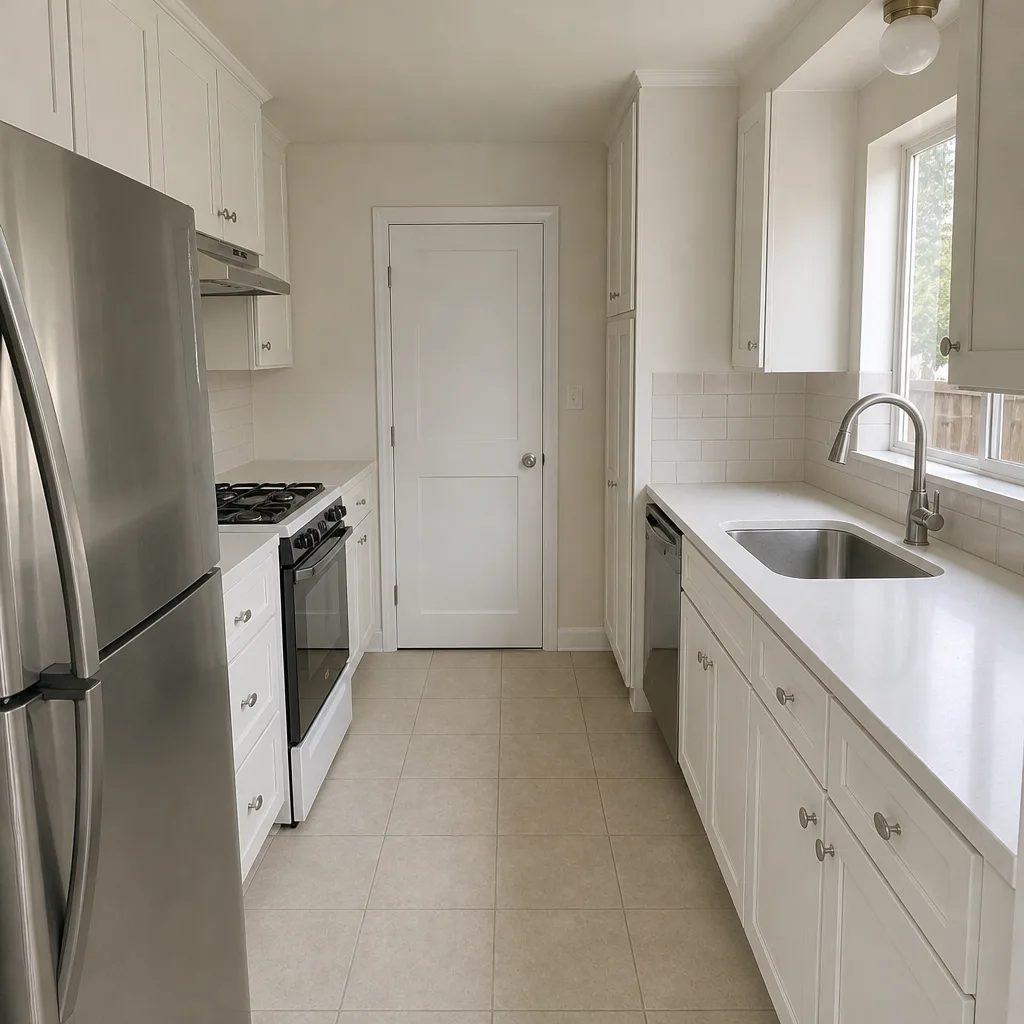 After