Last updated November 18, 2026


Free written scope consultation - allowances, timeline, and change-order rules on paper before a single trade is scheduled
The Complete Driveway & Pavers Guide for Sunnyvale Homeowners
Here’s the part of a paver driveway nobody puts in the brochure: the surface you pick is almost the last decision that matters. In Sunnyvale, most paver failures we get called out to look at aren’t material defects at all. They’re base failures. The soil under this city holds a lot of clay, and clay moves with the seasons. Pick a beautiful paver and set it on a shallow, standard-depth base, and it will heave, settle, and shift long before the stone itself wears out. This guide walks through the decisions that actually determine whether your driveway lasts: soil prep, City of Sunnyvale impervious-surface limits, drainage, edge restraint, and how the driveway ties into your garage apron, walkways, and landscaping. By the end, you’ll know what to ask before you sign a contract.
Quick Answer
A driveway paver project in Sunnyvale usually needs a deeper, better-compacted base course than the manufacturer’s standard spec because of the area’s expansive clay soil, plus a drainage plan that respects the city’s limits on how much of your lot can be covered by hard surfaces. Concrete pavers, natural stone, and permeable grid systems each handle Sunnyvale’s wet-winter, dry-summer cycle differently, and the right one depends on your soil, your slope, and how much driveway you actually want to keep usable. Get the base and drainage right and the surface will hold for decades; skip them and no paver brand will save the job.
Styles & brands we work with
- Kitchen remodeling
- Bathroom remodeling
- Home additions & ADU
- Roofing
- Windows & doors
- Driveway & pavers
- Fence
Table of Contents
- Why Sunnyvale’s Clay Soil Changes Everything
- Impervious Surface Limits and Permeable Pavers in Sunnyvale
- Concrete Pavers vs. Natural Stone vs. Permeable Grid: A Side-by-Side
- What a Properly Scoped Driveway Project Actually Includes
- Garage Aprons, Walkways, and Landscaping: Avoiding the Seam Problem
- How a Paver Driveway Goes In, Step by Step
- What Driveway Pavers Cost, and How Estimates Work
- Common Mistakes to Avoid
Why Sunnyvale’s Clay Soil Changes Everything
Clay doesn’t drain the way sand and gravel do. It swells when it takes on water and shrinks as it dries, and in Sunnyvale that happens on a yearly rhythm: the wet winter months fill the soil, and the long dry season pulls the moisture back out. A driveway base sitting on top of that movement needs to be deep enough and stiff enough to bridge over it, distributing the load of cars and trucks across a broader footprint instead of letting a thin layer flex with the clay underneath.
Manufacturers publish a standard base depth for their pavers. That number assumes reasonably stable, well-draining subgrade. It’s a sensible starting point, but it isn’t a stamp of approval for every lot. Sunnyvale sits on soils that hold water, and on some parcels that standard depth is too shallow to do the job. What happens when a contractor installs to the catalog spec without checking the ground first?
- Rutting along the wheel paths. The base compacts unevenly under repeated loads, and the pavers settle into shallow ruts.
- Heaving and lippage. Swelling clay pushes sections up, and neighboring pavers sit at different heights. That’s a trip hazard and a water trap.
- Joint sand loss and paver migration. Once the base moves, the interlock loosens, sand washes out of the joints, and individual units start to walk.
- Ponding. Even a small settlement change reverses the slope, and water that used to run off now sits.
The fix starts before a single paver is laid. The right approach is to evaluate the subgrade on your specific lot, remove unsuitable material where it’s soft, and build up a properly graded, compacted aggregate base at the depth your soil actually calls for. That’s the part with no visual payoff, which is exactly why it’s the part cut-rate installs skip. When we quote a project, base depth and compaction are line items, not assumptions. If you’re comparing estimates on a driveway in Sunnyvale, ask every contractor the same question: how deep is the base, and how are you compacting it?
Impervious Surface Limits and Permeable Pavers in Sunnyvale
Before color, before pattern, before anything: how much of your lot can legally be covered? Cities regulate impervious surfaces – roofs, concrete, and conventional pavers included – because hard cover increases stormwater runoff, and runoff has to go somewhere. Sunnyvale is no exception. Driveway expansions, new aprons, and front-yard hardscape can all bump up against a lot-coverage or impervious-surface threshold, and a widened driveway that pushes you over the line is a permit problem, not a design choice.
The exact limits and what counts toward them depend on your zoning and your lot, so the reliable move is to confirm the numbers with the City of Sunnyvale before finalizing a layout. Treat it as step one, right next to the design conversation. It’s far easier to plan a driveway that fits inside your allowed coverage than to redesign one that doesn’t.
This is where permeable pavers earn their place. A permeable system lets water pass through the joints and the open-graded base beneath instead of sheeting off the surface, and many jurisdictions treat that differently from conventional hardscape when calculating coverage. If you want maximum usable driveway area, a permeable paver system can be the difference between the driveway you want and a smaller one that squeezes under a limit.
- Open-graded base and bedding. A permeable system uses washed, single-size aggregate rather than tightly graded material so water actually moves through instead of pooling.
- Wider joints with clean stone. The gaps are filled with small, clean aggregate, not sand, so the surface drains across its whole face.
- An underdrain or storage layer. Depending on the soil and the slope, the water either infiltrates or gets routed, and that decision belongs in the design.
Permeable isn’t right for every lot. It needs the right soil conditions and maintenance habits, and it costs more than a conventional system in both materials and excavation. But on a Sunnyvale lot with tight coverage limits, it can be the most useful option on the table. If you’re planning a broader front-of-house refresh at the same time, it makes sense to coordinate the driveway with your fence installation so excavation, grading, and drainage get handled in one pass.
Concrete Pavers vs. Natural Stone vs. Permeable Grid: A Side-by-Side
Three families of hardscape dominate Bay Area driveways, and each handles the wet-winter, dry-summer cycle in its own way. Here’s how they stack up on the things that matter most in Sunnyvale.
Concrete pavers
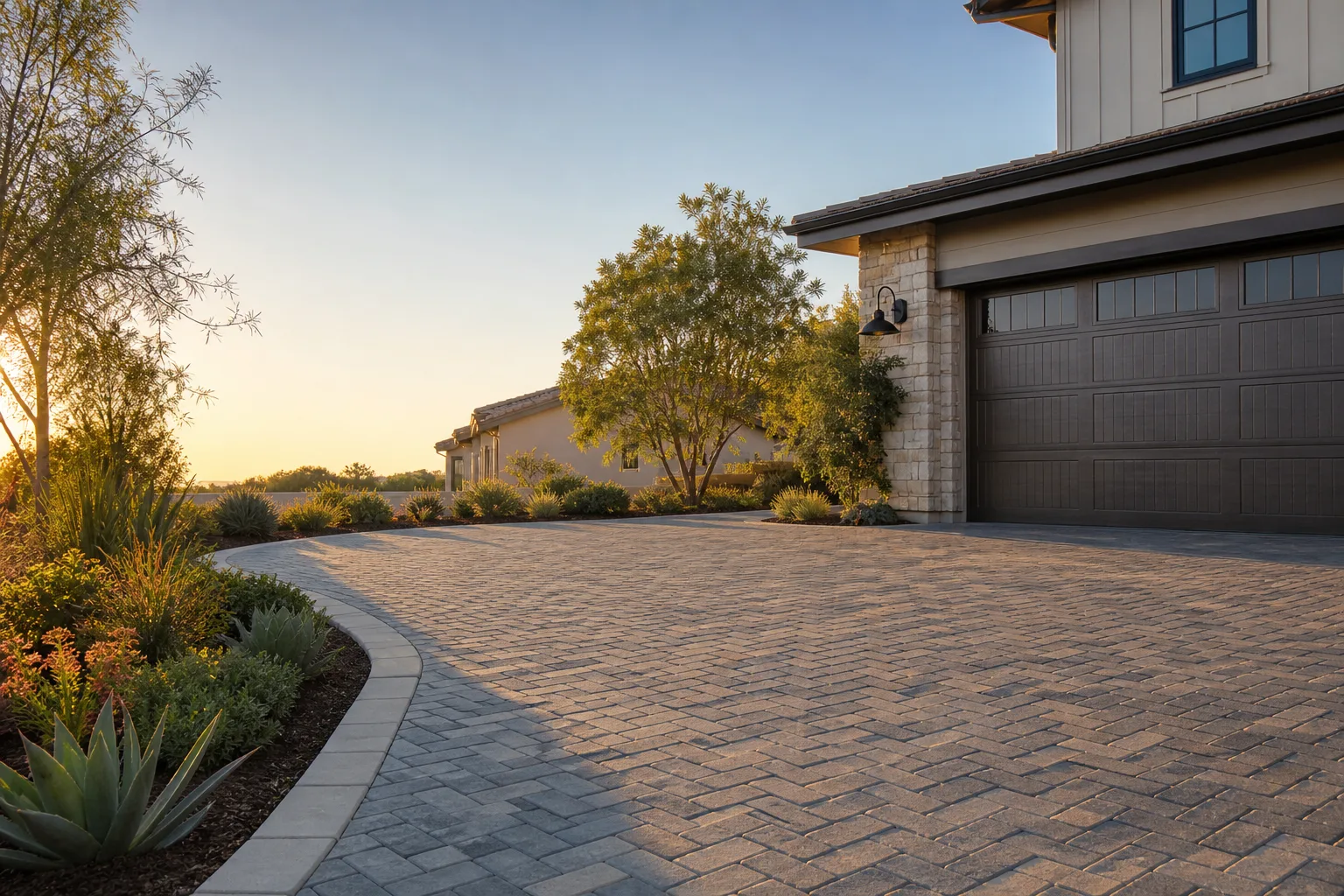
Manufactured segmental pavers from brands like Tremron, Techo-Bloc, and Cambridge Pavers are the workhorse choice for driveways. They’re dense, consistent, and made to tight tolerances, which means joints line up and interlock predictably. The range of shapes, textures, and colors is the widest of the three, and individual units can be lifted and re-set if something underneath ever needs attention. On a properly built base, a good concrete paver driveway in Sunnyvale handles seasonal soil movement well because the segmented surface flexes slightly rather than cracking as a slab would.
Natural stone
Stone has the longest service life of the three and the most character, and it’s also the most demanding. Natural stone is heavier, installs more slowly, and needs a very well-prepped, well-compacted base to sit flat and stay flat. Its thickness varies from unit to unit, which puts more weight on base preparation and on the skill of the setter. It performs beautifully in this climate, but it’s a material where the installer’s experience shows up in every seam. Expect the highest material cost of the three families.
Permeable grid systems
Permeable grids – either rigid units or flexible grid structures filled with gravel or grass – are the drainage-first option covered above. They’re the best fit when coverage limits are tight, and they handle heavy rain by moving water through the surface instead of across it. The trade-off is maintenance: they need regular sweeping and occasional refilling of the joint aggregate, and they tolerate less neglect than a solid paver surface.
| Factor | Concrete Pavers | Natural Stone | Permeable Grid |
|---|---|---|---|
| Best use | Most driveways | High-end, long-life | Tight coverage limits |
| Base demands | High | Highest | High, and open-graded |
| Handles clay movement | Well, if base is deep | Well, if base is excellent | Well, by design |
| Maintenance | Low | Low | Moderate |
| Repairability | Individual units lift | Individual units lift | Refill and re-grade |
| Relative cost | Middle | Highest | Middle to high |
Our driveway & pavers work uses interlocking and segmental systems from the paving brands we know hold up in this climate, and we match the family to the lot rather than defaulting to one material for every job.
What a Properly Scoped Driveway Project Actually Includes
The surface is maybe a third of the work. A driveway that’s still flat and tight a decade from now was built by a crew that got everything underneath and around it right. Here’s what belongs in a complete scope, in order of importance.
- Site evaluation and soil check. Before pricing, look at the subgrade. Where soft or unsuitable soil turns up, remove and replace it rather than paving over a problem.
- Grading and slope. Water has to leave the surface. The driveway needs to pitch toward the street, a drainage channel, or a designed infiltration area – never toward the garage or the foundation.
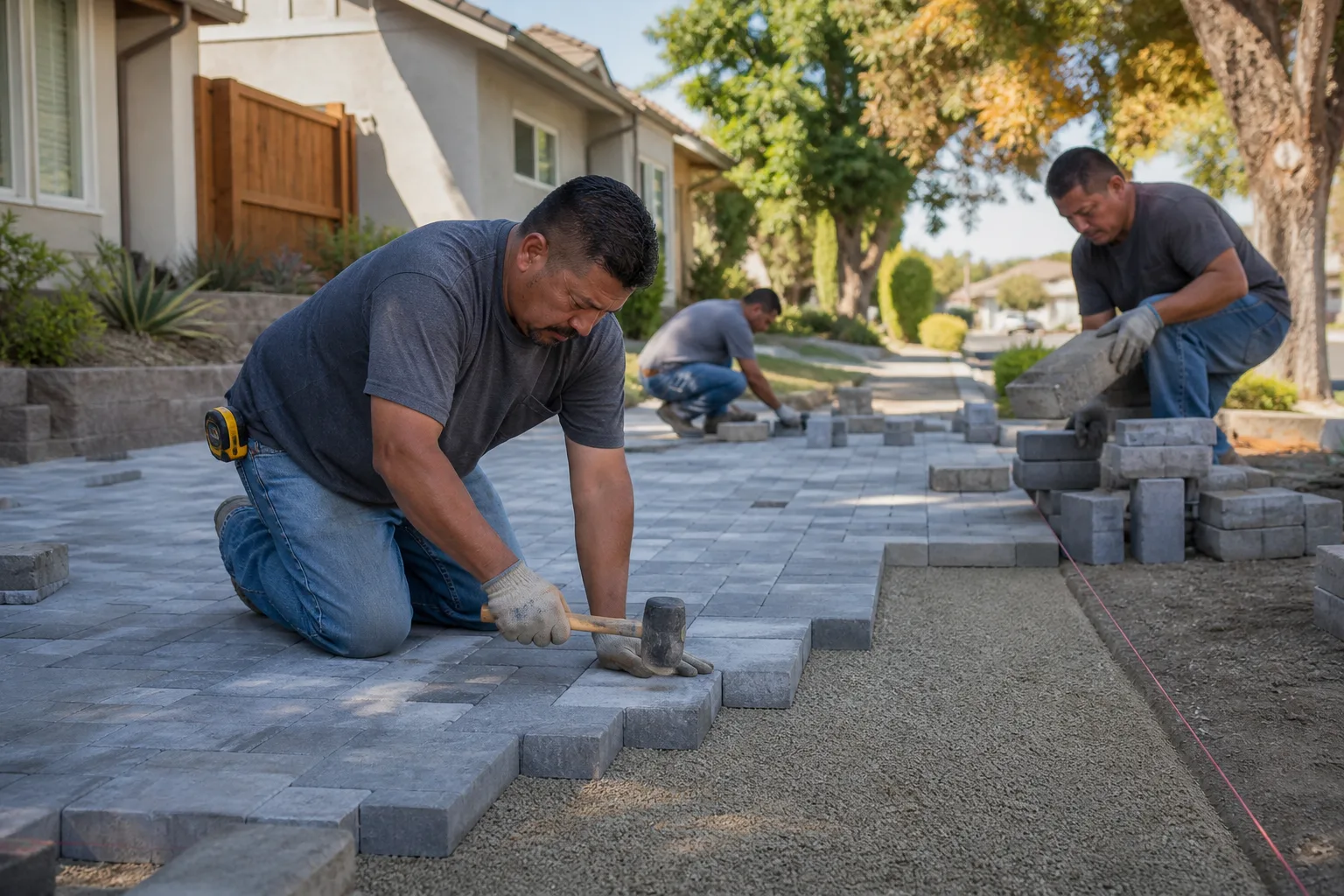
- Excavation and base course. Dig out enough to accommodate the base depth your soil calls for plus the bedding layer and the pavers themselves. Build the base in lifts and compact each lift.
- Drainage tie-ins. Connect the driveway to the site’s overall water management: gutters, yard drains, swales, or an underdrain beneath a permeable system.
- Edge restraint. A fixed edge on the open sides holds the field tight and stops lateral creep. Without it, the pattern widens at the edges and the joints open up.
- Bedding layer and pavers. A thin, screeded bedding layer over the compacted base, then the pavers set to a consistent pattern.
- Cutting and finishing. Cut in at edges, transitions, and any curves, then compact the field and lock the joints with the proper joint material.
Edge restraint is the one that gets overlooked. It’s a strip of concrete, steel, or rigid plastic pinned along the open perimeter of the driveway. It looks like a trim detail, but it’s structural. On a clay-heavy lot, an unconfined paver field will spread over time as the whole surface expands and contracts. Ask about the edge restraint on any quote you receive in Sunnyvale. If it’s not on there, something else is missing too.
Garage Aprons, Walkways, and Landscaping: Avoiding the Seam Problem
The most common thing we get called back to fix isn’t a bad driveway. It’s a driveway and a walkway that weren’t designed together. Two different surfaces, two different base depths, two different settlement rates, meeting at a line. Two years later there’s a trip hazard at the seam and water finding its way into the gap.
It’s worth thinking of the front of your house as one continuous surface plan rather than a series of separate projects. A few places where coordination pays off:
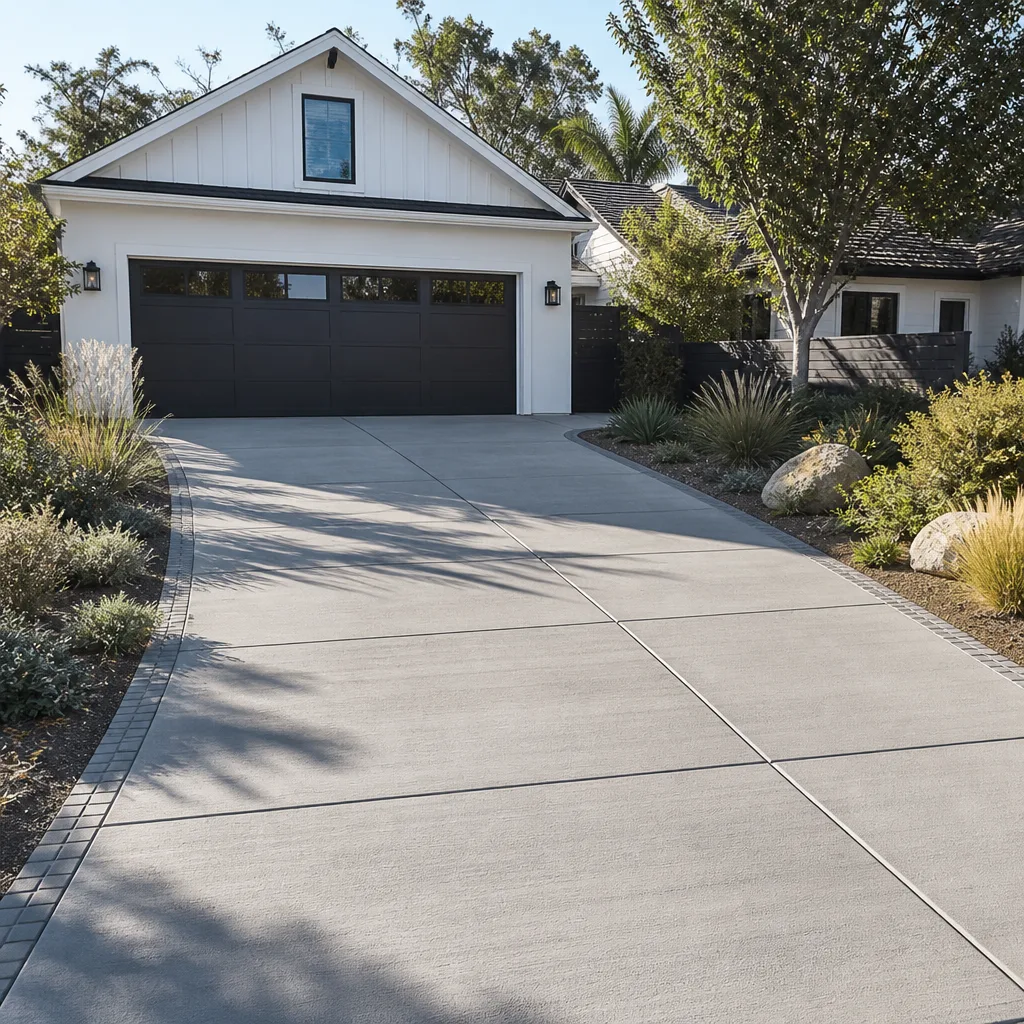
- The garage apron. The transition from the garage slab to the driveway needs a stable base under both sides and a slope that carries water away from the door. If those two surfaces are installed at different times by different crews, the transition is where problems show up first.
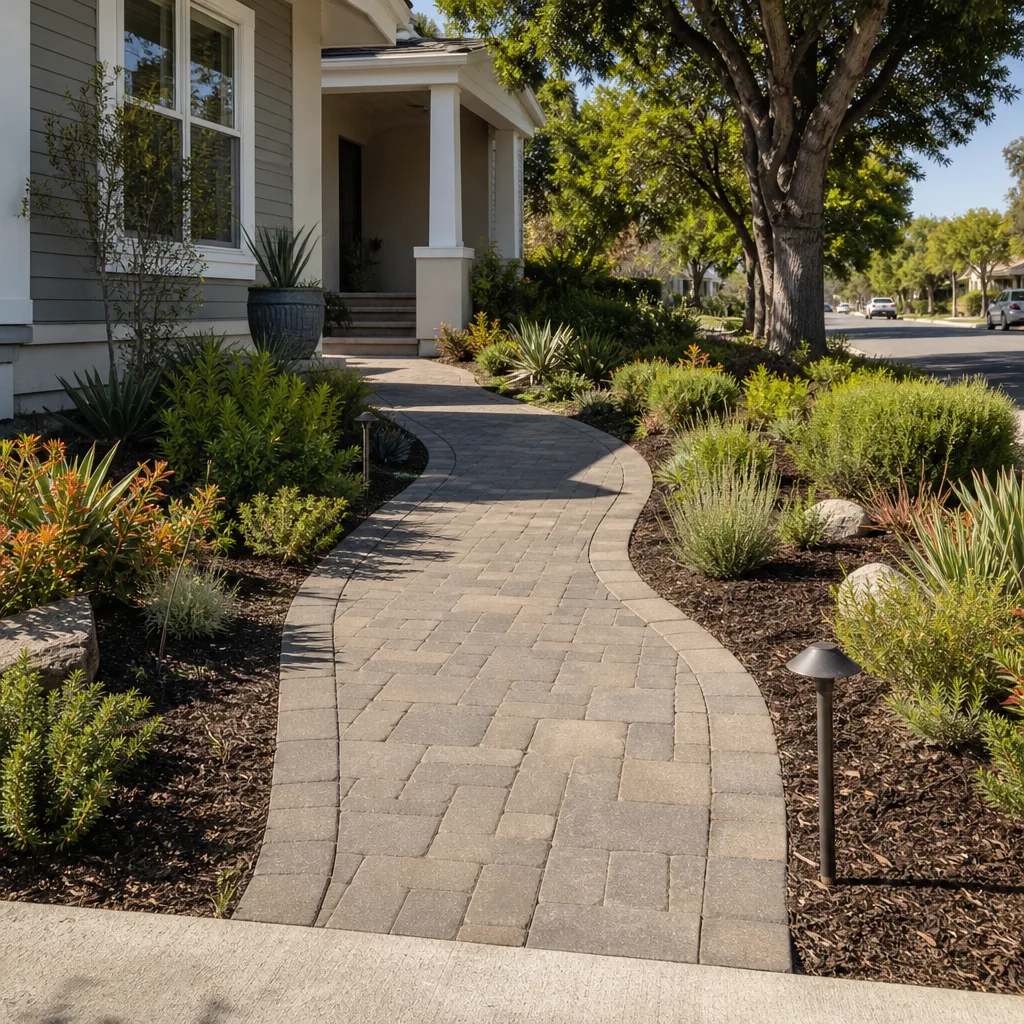
- Front walkways. Matching the pavers and the base detail between the driveway and the path to the door keeps the whole front of the house reading as one design and keeps both surfaces settling at the same rate.
- Landscape beds and lawn edges. Bed borders, plantings, and lawn edging all meet the driveway. Coordinate the driveway edge with the planting plan so the edge restraint and the bed line agree.
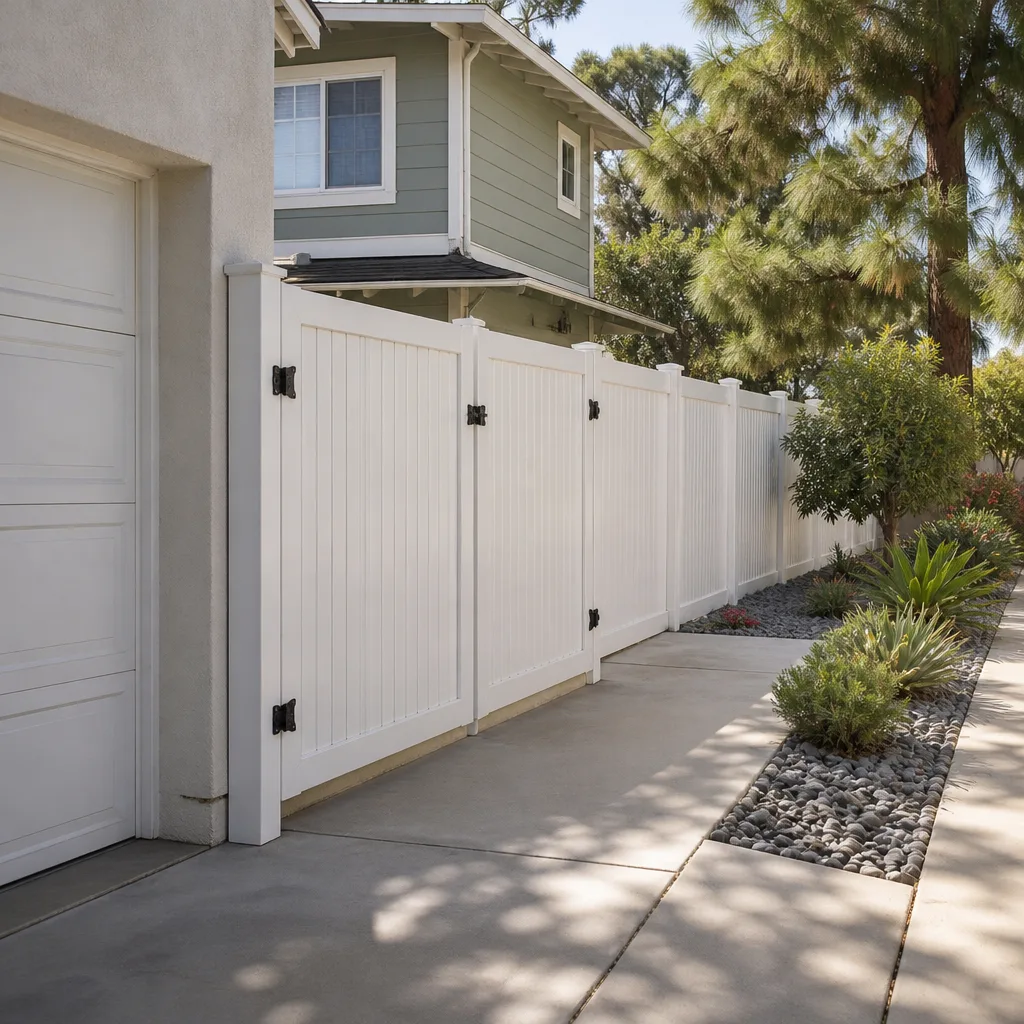
- Fence lines and gate returns. A fence set along a driveway gets its line and its gates set off the finished driveway surface, not a rough grade that later changes.
This is where working with one contractor across trades actually pays. When the same team handles the driveway, the walkway paving, the fence, and the landscaping tie-ins, the seams get planned instead of discovered. That’s the thinking behind our Construction Sunnyvale approach: the driveway, the fence, the windows, and the roof are all one property, so the surface transitions should be designed as one project.
How a Paver Driveway Goes In, Step by Step
Here’s the sequence a properly run paver driveway follows, from first conversation to finished surface. Timelines vary with size, site access, drainage scope, and weather, so treat this as the order of operations rather than a schedule:
- Site visit and measurements. Measure the driveway, check the slope, and look at the subgrade. Confirm coverage limits for the lot.
- Design and material selection. Pick the paver family, pattern, and color. Set the drainage strategy.
- Written estimate. Base depth, excavation, drainage, edge restraint, pavers, and finishing – itemized.
- Permits if required. Confirm with the City of Sunnyvale whether your scope needs one, and pull it before work starts.
- Demolition and excavation. Remove the old surface and dig to the required depth, hauling off unsuitable material.
- Base build. Place and compact the base in lifts to full depth, checking slope as you go.
- Drainage and edge restraint. Install underdrains, tie-ins, and the perimeter restraint before the surface goes down.
- Bedding and pavers. Screed the bedding layer, lay the pavers to pattern, cut in at edges and curves.
- Compaction and joint filling. Compact the finished field and fill the joints with the correct material.
- Clean-up and walkthrough. Final sweep, site cleanup, and a walkthrough of what was built and how to care for it.
The biggest variation between projects is step six. A conventional system and a permeable system diverge at the base, the bedding, and the joint material, and that’s why the drainage decision has to be made before the excavator arrives, not after.
What Driveway Pavers Cost, and How Estimates Work
We don’t publish a single per-square-foot number for Sunnyvale, because it would be misleading. Paver driveway pricing depends on the square footage, the paver family and pattern, the existing surface and how much of it has to be removed, the excavation depth your soil requires, the drainage scope, and the edge conditions. A straightforward replacement on a stable lot and a full rebuild with an underdrain and a permeable system on a soft lot are different projects with different price ranges.
What you should expect from the estimate itself is more important than a headline number:
- Itemized line items – excavation, base, drainage, restraint, pavers, and finishing shown separately, so you can see what you’re paying for.
- Base depth stated in the quote, tied to your site, not a generic spec.
- Drainage scope spelled out, so there’s no surprise mid-project.
- A written, fixed price that doesn’t change once work begins – no change orders introduced after demo.
- Permits identified up front and pulled before work starts, with inspections passed where the city requires them.
Estimates are free, and the written estimate sets the final price. If a quote you’re comparing is much lower than the others, the first question to ask is what got left out of the scope – almost always the base or the drainage. Our technicians have up to 10 years of experience building driveway systems in this climate, and we’ll walk you through every line of the estimate before you commit.
Common Mistakes to Avoid
- Accepting the catalog base depth without checking the soil. Standard specs assume stable subgrade, and Sunnyvale’s clay doesn’t always cooperate. A shallow base on expansive soil is a short driveway.
- Skipping the impervious-surface check. Expanding a driveway without confirming the coverage limit with the City of Sunnyvale can mean a redesign or a permit problem after the excavation is already done.
- Forgetting edge restraint. The paver field has to be held at its edges. Without restraint, an unconfined driveway on a shifting base spreads and the joints open.
- Draining water toward the garage or the house. Grading that sends water to the garage door or the foundation causes a much bigger problem than a wet driveway. The slope is a design decision, not an afterthought.
- Pricing the driveway separately from the walkway and the apron. Mismatched base depths and settlement rates create the seam problem within a couple of years.
- Choosing a permeable system on a lot that isn’t suited to it. Permeable pavers need the right soil, slope, and maintenance habits to work. The design has to fit the site.
- Comparing quotes on the surface cost only. The cheapest surface price usually has the thinnest base under it. Compare scopes line by line, not totals.
See the difference
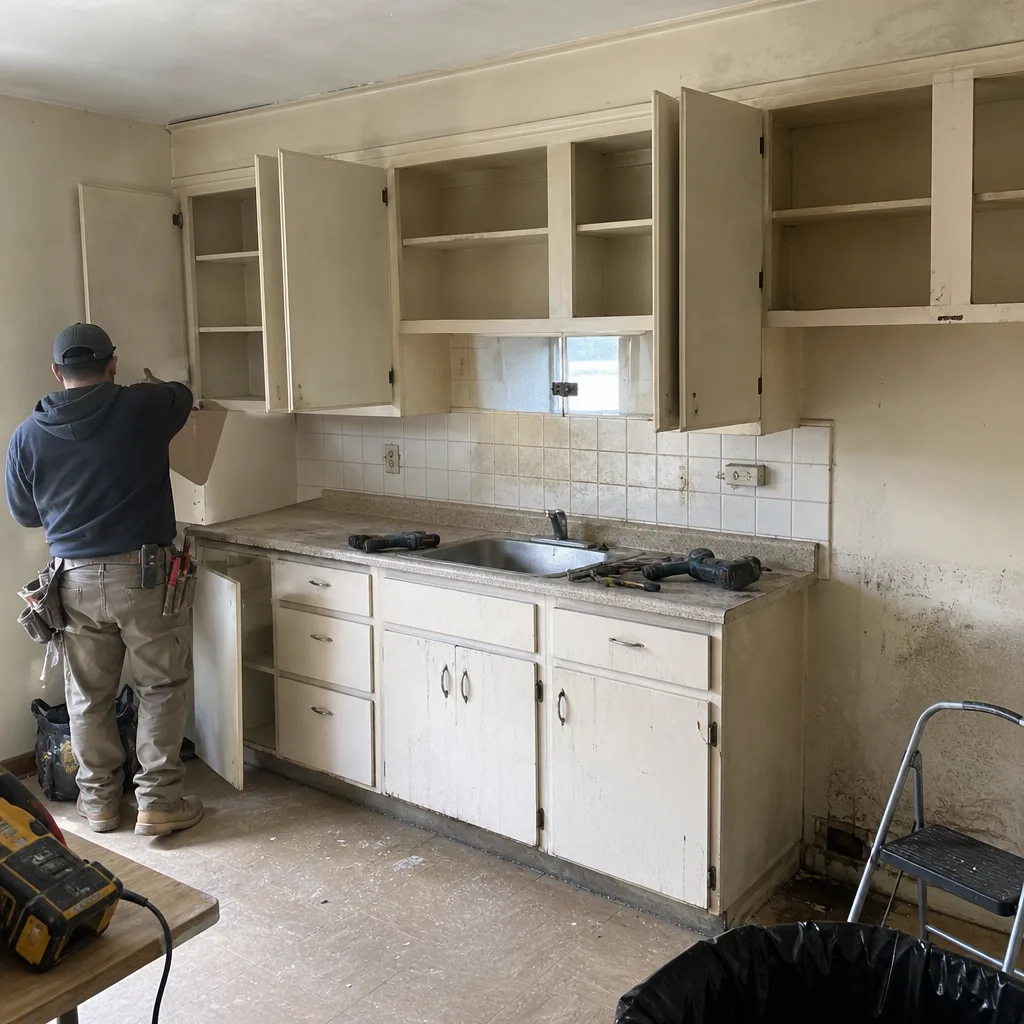 Before
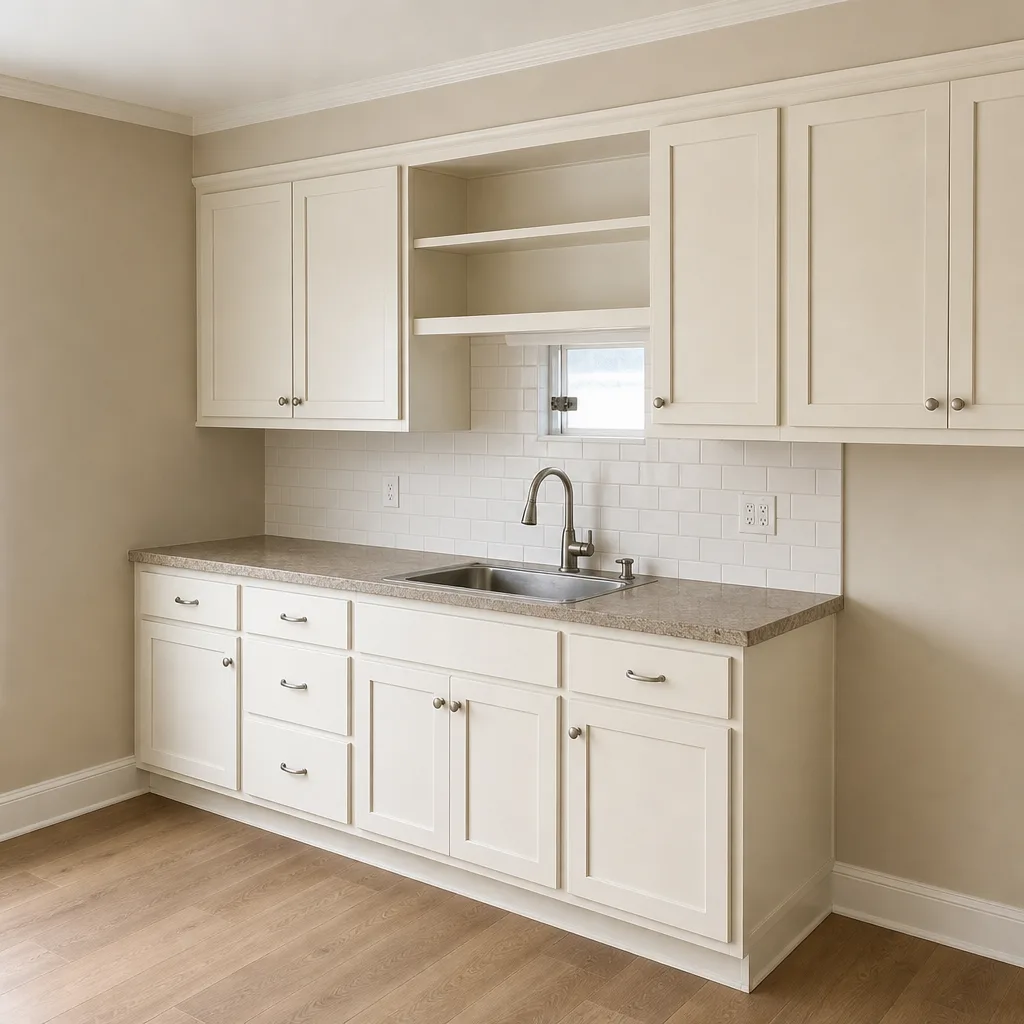 After
 Before
 After
 Before
 After
When to Call a Professional
A paver driveway is a structural system under the surface, and some situations need a real assessment before you commit to a material or a contractor. Call us when:
- You’re widening or expanding a driveway and need to know your lot’s impervious-surface limit.
- An existing driveway is rutting, heaving, lipping, or ponding – those are base symptoms and need diagnosis.
- You want a permeable system and need to know whether the soil and slope will support it.
- Your driveway, walkway, garage apron, and landscaping need to be planned together.
Construction Sunnyvale offers free estimates in Sunnyvale – call (888) 255-9137. We answer 24/7, and fast dispatch runs from 7am to 7pm, Sunday through Friday.
Frequently Asked Questions
Deeper than the manufacturer’s standard spec in many cases, because of the clay-heavy soil. The right depth depends on your specific subgrade, and we evaluate it on site before quoting. On a soft lot, excavation and a thicker, well-compacted base course are essential; on a stable one, the standard depth may be adequate. Call (888) 255-9137 and we’ll talk through your lot – estimates are free.
Often yes, especially for an expansion, a new approach, or a change in the amount of impervious surface on the lot. Permit requirements depend on your scope and zoning, so confirm with the City of Sunnyvale before work begins. We identify permit needs up front and pull and pass them as part of the project. Call (888) 255-9137 for a free estimate.
They can, because a permeable system manages runoff differently from conventional hardscape, and many cities treat it differently when calculating coverage. Whether it works for your lot depends on the soil, the slope, and the city’s rules for your parcel. Call (888) 255-9137 and we’ll tell you what’s realistic – estimates are free.
Concrete pavers offer the widest range of patterns and colors, tight tolerances, and easier repair. Natural stone lasts the longest and looks the most distinctive, but it costs more and demands a more carefully built base. Both handle this climate well when installed right. Call (888) 255-9137 to compare materials for your specific lot.
No. We give a written, itemized estimate and a fixed price, and the written estimate sets the final price. Base depth, drainage, and edge restraint are priced in the estimate, not discovered during the build. Call (888) 255-9137 to schedule your free estimate.
It depends on square footage, drainage scope, site access, and weather. A straightforward replacement takes less time than a full rebuild with excavation, underdrain, and a permeable base. The written estimate includes the sequencing, and we confirm timing before work starts. Call (888) 255-9137 for a free estimate.
The Bottom Line
On a paver driveway in Sunnyvale, the base and the drainage come first and the surface comes last. The clay soil under most of this city needs a deeper, well-compacted base than a catalog spec assumes, the city’s impervious-surface rules may shape how much driveway you can build, and the choices between concrete pavers, natural stone, and permeable systems are really choices about how each one handles water and soil movement through the seasons. Edge restraint, grading, and the tie-ins between your driveway, walkway, and garage apron are what keep the surface tight and safe years from now. Compare estimates on scope, not totals – and ask every contractor about their base depth. From the roof to the driveway, we handle the whole property so those seams get planned, not patched.
To plan your driveway project with a free, itemized estimate, call (888) 255-9137. We answer 24/7, and fast dispatch runs from 7am to 7pm, Sunday through Friday. We’re happy to walk through base depth, drainage, and coverage limits for your Sunnyvale lot before you commit to anything. For a broader look at how a driveway fits into a full-property plan, see our home additions & ADU work, which often runs alongside exterior and hardscape projects.
Written by the team at Construction Sunnyvale.