Last updated November 18, 2026


Free written scope consultation - allowances, timeline, and change-order rules on paper before a single trade is scheduled
Seasonal Construction Care for Sunnyvale: Year-Round Homeowner’s Guide
Mild winters are the reason most Sunnyvale homeowners skip fall prep entirely, and that is exactly the problem. In colder parts of the country, a hard freeze forces you to think about your house every October. Here, nothing forces it. Roofs dry out slowly, gutters load up quietly through November, and caulk joints cook all summer without anyone noticing until a stain shows up inside. This guide is a month-by-month framework built around how materials actually behave in Sunnyvale’s Mediterranean climate, so you can time the work instead of reacting to it. You’ll learn what to check, when to check it, and which jobs only look like weekend projects.
Quick Answer
Home construction and exterior maintenance in Sunnyvale follow a predictable annual stress cycle: summer UV dries and cracks sealants on stucco, trim and flatwork, fall drops leaf load from the valley oaks into gutters and drains, and winter moisture finds every gap those first two seasons opened. The highest-value maintenance windows are late September (drainage and roof flashing before the first significant rain) and late March (a full inspection after the wet season ends). Spacing inspections around those two dates catches most damage while it is still small and inexpensive to correct.
Styles & brands we work with
- Kitchen remodeling
- Bathroom remodeling
- Home additions & ADU
- Roofing
- Windows & doors
- Driveway & pavers
- Fence
Table of Contents
- Why Sunnyvale’s Climate Demands Its Own Maintenance Calendar
- The Month-by-Month Sunnyvale Maintenance Calendar
- Fall Priorities: Drainage, Gutters and Roof Flashing
- Summer Priorities: UV Damage, Sealants and Driveway Care
- Spotting Winter Damage After the Rain Stops
- What’s Genuinely DIY and What Only Looks DIY
- Materials That Hold Up in This Climate
- Planning Bigger Projects Around the Seasons
Why Sunnyvale’s Climate Demands Its Own Maintenance Calendar
National seasonal advice is written for places with four hard seasons and a deep winter. Applied to Sunnyvale, it gets the timing wrong. The local pattern is a long dry stretch from roughly spring through fall, a wet window that concentrates most annual rainfall into a handful of storms, and a growing season that runs nearly all year. Each of those shapes what fails and when.
The dry months do the most hidden damage. UV exposure breaks down caulk at window and door perimeters, sealant at stucco control joints, and the surface of asphalt and concrete flatwork. The material doesn’t disappear overnight; it shrinks, cracks, and opens a channel. Water doesn’t need a hole in your roof to get in. It needs a hairline gap behind a piece of trim.
Then the wet season arrives and finds every gap the dry season created. This is why water damage in Sunnyvale so often feels sudden. A stain appears on a ceiling in January after the first heavy rain, and the homeowner assumes something failed that week. In our experience, the failure started in August.
- Summer UV attacks sealants, paint, stucco, and pavement surfaces.
- Fall debris loading from mature trees fills gutters and buries drainage grates.
- Winter moisture enters through whatever the first two seasons opened.
- Year-round growth means roots, vines, and soil movement keep pressing on fences, pavers, and foundations.
Sunnyvale also sits between the bay influence and the warmer interior, which means morning dampness and afternoon dry-out are both part of the daily pattern. Wood fences, exterior trim, and wooden gates take that cycle thousands of times a year. That’s a material stress most of the country doesn’t experience in the same way.
The Month-by-Month Sunnyvale Maintenance Calendar
This is the framework. Treat it as a timing guide, not a rigid schedule. If a storm arrives early, move the fall items up.
- January to February: Mid-wet season. Walk the interior ceilings and walls facing the weather for stains, and check that downspouts are actually moving water away from the foundation. Don’t climb on a wet roof.
- March: The most important inspection of the year. The wet season is winding down, so damage is visible but hasn’t had months to spread. Roof, flashing, exterior walls, fence posts, and flatwork all get a look.
- April to May: Repair window. Caulk and sealant jobs, paint touch-ups, fence board replacement, and paver re-leveling all go better in dry, moderate weather than in the heat of summer.
- June to August: UV peak. Check sealant on the sun-facing sides of the house, reseal driveways if they’re due, and keep an eye on any stucco cracking near corners and openings.
- September: Pre-rain prep. Clear gutters and downspouts, confirm drainage grades run away from the house, and inspect roof flashing before the first significant storm. This is the single highest-value week of maintenance in Sunnyvale.
- October to November: Leaf load peaks as the oaks drop. Repeat gutter clearing after the bulk of the drop, and check that area drains and swales are clear.
- December: First rains. Confirm what you prepared actually works. Watch for pooling on driveways, patios, and walkways, and confirm water exits the property.
Print that list or keep it on your phone. Homeowners who do the March and September passes consistently spend less on repairs than those who wait for something to fail, and they get more years out of roofing, paint, and pavement.
Fall Priorities: Drainage, Gutters and Roof Flashing
Fall is when Sunnyvale homes take their most preventable damage, because the two biggest risks, clogged gutters and roof flashing that has quietly separated, are both invisible from the ground and both fail exactly when water arrives.
Gutter loading from mature trees
Sunnyvale’s tree canopy is one of the things that makes the city worth living in, and it’s also the reason gutters here fill faster than the national average. A full gutter doesn’t just overflow at the fascia. It sends water down the exterior wall, behind siding and stucco, and into the soil at the foundation. Clear the primary run in September and check again after the bulk of the leaf drop.
Checking drainage grades before the first significant rain
Water should leave the house, not sit next to it. Walk the perimeter on a dry day and look at the slope of the soil, the height of the soil line against the stucco or siding, and where each downspout discharges. In our experience, the most common drainage problem in Sunnyvale isn’t a missing system, it’s soil that has built up against the house over years. Two inches of grade can be the difference between water running away and water running in.
Roof flashing inspection timing
Flashing at chimneys, skylights, valleys, and wall-to-roof transitions is where most roof leaks start, not in the field of shingles. Check it before the wet season, not after. A roof that looks fine from the driveway can have lifting step flashing at a sidewall that nobody has looked at in years.
If the roofing is at or near the end of its service life, seasonal patching becomes a treadmill. That’s the point where a full replacement conversation makes more sense, and modern systems from GAF, CertainTeed, or Owens Corning give you much longer service intervals than what’s likely up there now. If that’s where you land, our Construction Sunnyvale team can walk the roof with you and put the options in writing.
Summer Priorities: UV Damage, Sealants and Driveway Care
Sunnyvale’s dry summer does its work silently. The sun doesn’t break a roof or a wall in a single afternoon. It degrades the materials that keep water out, one joint at a time, and the damage stays invisible until the rainy season proves it.
Sealant and caulk on stucco and trim
Caulk at window and door perimeters, sealant at stucco control joints, and painted wood trim all face the same pattern: expand in heat, contract at night, and eventually lose adhesion. Once caulk pulls away, water gets behind it. Run a finger along the sun-facing walls in July and look for cracking, peeling, or gaps. This is one of the highest-return checks on the whole list, because the repair is small and the consequence of skipping it isn’t.
Driveway sealer checks
Asphalt needs resealing periodically, and summer is the right window here. Water should bead on a healthy surface. If it soaks in, or if you can see light gray, dried-out aggregate, the surface is unprotected and UV is breaking down the binder. Concrete flatwork doesn’t need sealer the same way, but it does need a look at joints and edges for cracks that widen over the dry season. For paver driveways and patios, summer is the time to check joint sand and look for settling.
Preparing for heat events
Before the hottest stretch of the year, check exterior doors for swelling and sticking, look at weatherstripping, and confirm that any exterior vents are clear. Windows and doors are the biggest source of heat gain in most Sunnyvale homes, and older units often let in more than they should. When you’re ready to address that properly, modern options from PGT, CGI, or Therma-Tru combine energy performance with the right look for the house. Ask us about the right specification for your walls and exposure.
Spotting Winter Damage After the Rain Stops
March is the month that matters. When the wet season ends, damage is fresh and visible but hasn’t had time to spread. Here’s what to look for, room by room and surface by surface.
On the roof
- Dark streaks or staining on ceilings and the top of exterior walls.
- Lifted, curling, or missing shingles, particularly near valleys and penetrations.
- Granules collecting in gutters, which signals shingle wear.
- Flashing that has pulled away or shows rust at fasteners.
On exterior walls
- Bubbling, blistering, or soft spots in stucco.
- Paint peeling in patterns, especially near windows and doors.
- Gaps at caulk joints that opened during the wet season.
- Water staining on trim, especially at the bottom of walls where splash-back hits.
On flatwork, fences, and grades
- Settlement or washout along driveway and walkway edges.
- Ponding areas that stayed wet for days after a storm.
- Fence posts that have loosened or tilted. Wood posts fail at the soil line, not above it.
- Soil that has eroded away from the foundation or against fence lines.
Keep the list narrow. Most of the real damage shows up as water staining, soft material, or movement. If you see any of those, get eyes on it before summer, because the dry season will make the problem look better without actually fixing it.
What’s Genuinely DIY and What Only Looks DIY
Some seasonal care is well within reach for a careful homeowner. Some of it looks simple from the ground and isn’t. Knowing which is which is the difference between saving money and creating a bigger repair bill.
Genuinely DIY
- Clearing gutters and downspouts from a stable ladder with a spotter.
- Washing exterior walls and flatwork with a hose and mild detergent.
- Raking leaves and clearing area drains.
- Touching up paint on trim and doors.
- Checking and replacing weatherstripping.
- Visually inspecting the roof, walls, and flatwork from the ground with binoculars.
Looks DIY, isn’t
- Roof work. Walking a roof is a fall hazard, and a repair that isn’t properly integrated with the existing assembly can create a leak where there wasn’t one.
- Flashing. Getting step flashing or a skylight seal right means understanding how water actually moves on that slope. Small mistakes are hidden until the next storm.
- Stucco repair and larger caulk replacement. Matching texture and getting the joint prepared correctly take experience.
- Drainage correction. Regrading around a foundation must move water away without creating new issues at the property line.
- Driveway and patio work. Base preparation and compaction are where most paver failures start, and both are invisible once the surface is done.
- Fence post replacement. The visible part is the post. The job is the footing and the setting.
If a job involves height, water intrusion, or setting something that has to hold for years, it’s the wrong one to learn on. That’s the pattern we see most: homeowners who call after a weekend attempt because the original problem is now joined by a second one.
Materials That Hold Up in This Climate
Sunnyvale’s pattern of long dry summers and concentrated wet winters is easier on some materials than others, and it rewards picking correctly the first time. Roofing choice matters, but so does caulk, paint, fencing material, and hardscape. What you specify is what you maintain for the next decade-plus.
- Roofing: Choose by slope, exposure, and budget. GAF, CertainTeed, and Owens Corning systems all have long service intervals when installed with the right underlayment and flashing.
- Fencing: Vinyl and aluminum stand up to both the dry and wet seasons with far less upkeep than wood. Sourcing from Master Halco, Ameristar, Jerith, Barrette, Bufftech, or ActiveYards lets you match the style to the neighborhood.
- Driveways and pavers: Interlocking pavers handle ground movement better than poured surfaces, which is why they hold up well on older Sunnyvale lots. Belgard, Unilock, and Techo-Bloc offer systems built to be repaired in place if a section fails.
- Siding and trim: Fiber cement such as James Hardie resists moisture and holds paint well in this kind of climate, which reduces how often you’re back up a ladder.
If you’re tackling exterior work and want to do it once, the right move is to specify materials for this climate and then install them correctly. We’re authorized to work with more than 50 named brand manufacturers across roofing, fencing, windows, doors, paving, cabinetry, surfaces, and fixtures, so the material choice follows the house, not the other way around.
Planning Bigger Projects Around the Seasons
Seasonal care keeps a home healthy. Bigger projects, when they’re due, should be timed to the climate too. Knowing the right window for each one keeps the punch list small and the result right the first time.
- March to May is the best window for most exterior work, including driveway & pavers and any hardscape or grading corrections. Conditions are dry enough to work efficiently but not hot enough to stress the materials.
- April to October works for roofing. Roof replacement is much easier when the weather is dry. The exception is storm damage, which doesn’t wait.
- Spring and fall are ideal for fence installation, when the ground is workable and the heat isn’t punishing the set.
- Interior remodels fit any season. Kitchens and bathrooms are climate-friendly year-round. When you’re ready, options like KraftMaid and Wellborn cabinetry and surfaces from Cambria let you build to a plan rather than accepting builder defaults.
- ADUs and additions plan best in late winter for a spring start. Permits and design take time, and a spring start puts framing and exterior work in the ideal window. Whether you go site-built or prefab (Abodu, Dvele, Mighty Buildings, Boxabl, and Plant Prefab are all on the table), our home additions & ADU work covers both paths.
One advantage of a single contractor across trades: you don’t have to coordinate roofing, fencing, paving, and interior work through separate calendars. All of it gets planned around the same weather window.
Common Mistakes to Avoid
- Skipping fall prep because the winter is mild. Mild winters don’t prevent water intrusion. They just make it less obvious until it shows up inside.
- Clearing gutters once and calling it done. Sunnyvale’s canopy drops in stages. A single pass in September leaves the heaviest leaf load sitting in the troughs by December.
- Waiting until a stain appears to check the roof. By the time water reaches an interior ceiling, the exterior failure is usually months old.
- Assuming summer is safe because it’s dry. The dry season is when UV does the damage that the wet season exposes. Both matter.
- Walking a roof on a warm day without fall protection. This is the most common injury scenario we’re called to. Please don’t.
- Caulking without cleaning and priming the joint. New caulk over old, dirty material will fail in the same place sooner than expected.
- Replacing a fence without checking the soil conditions. Posts fail at the soil line, not at the visible board. If the footings weren’t right, the new fence will tilt too.
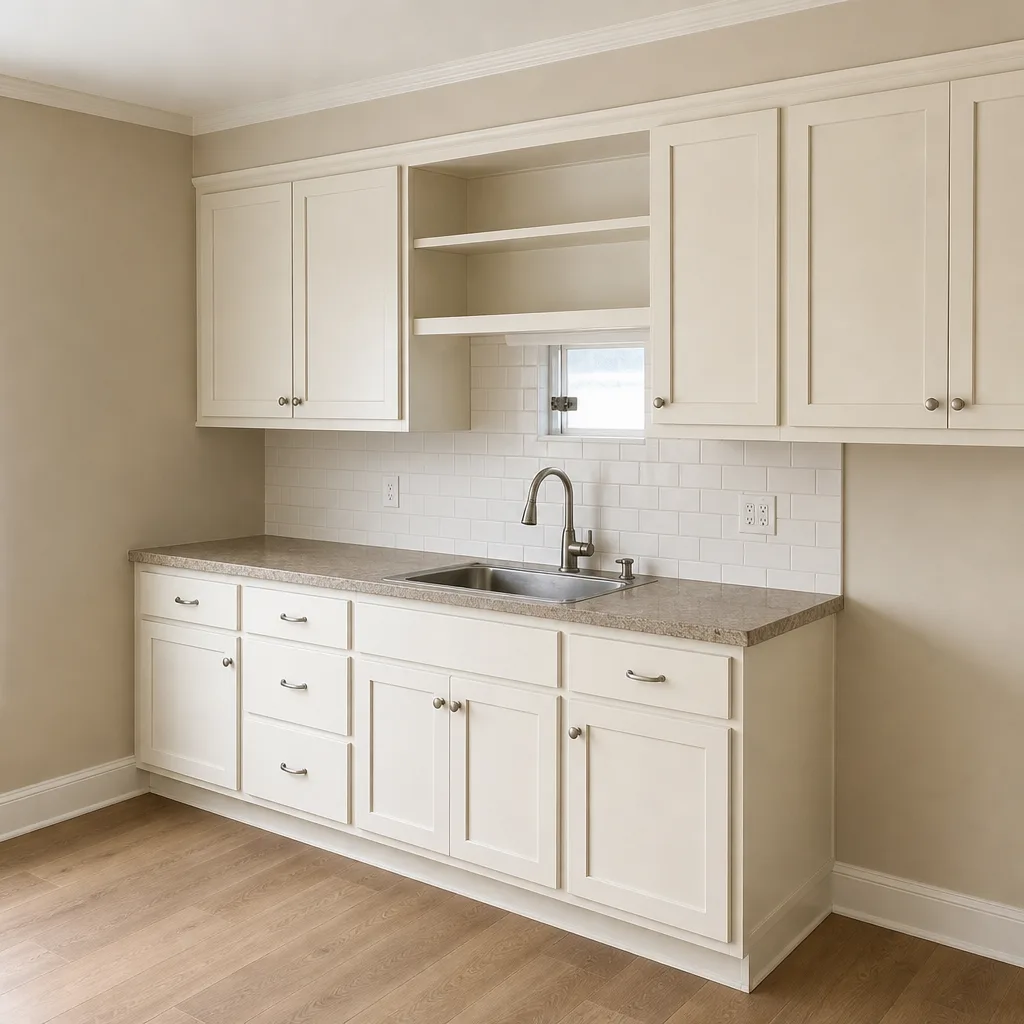
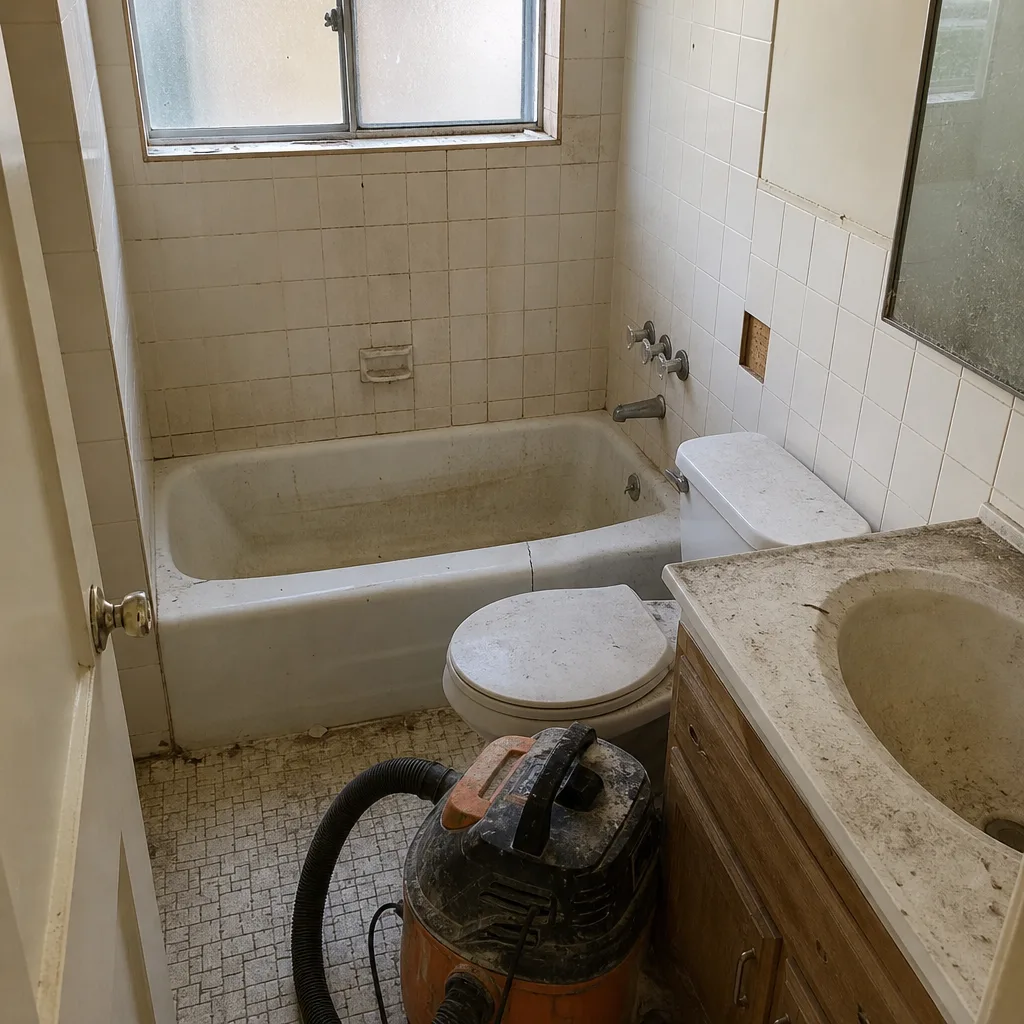
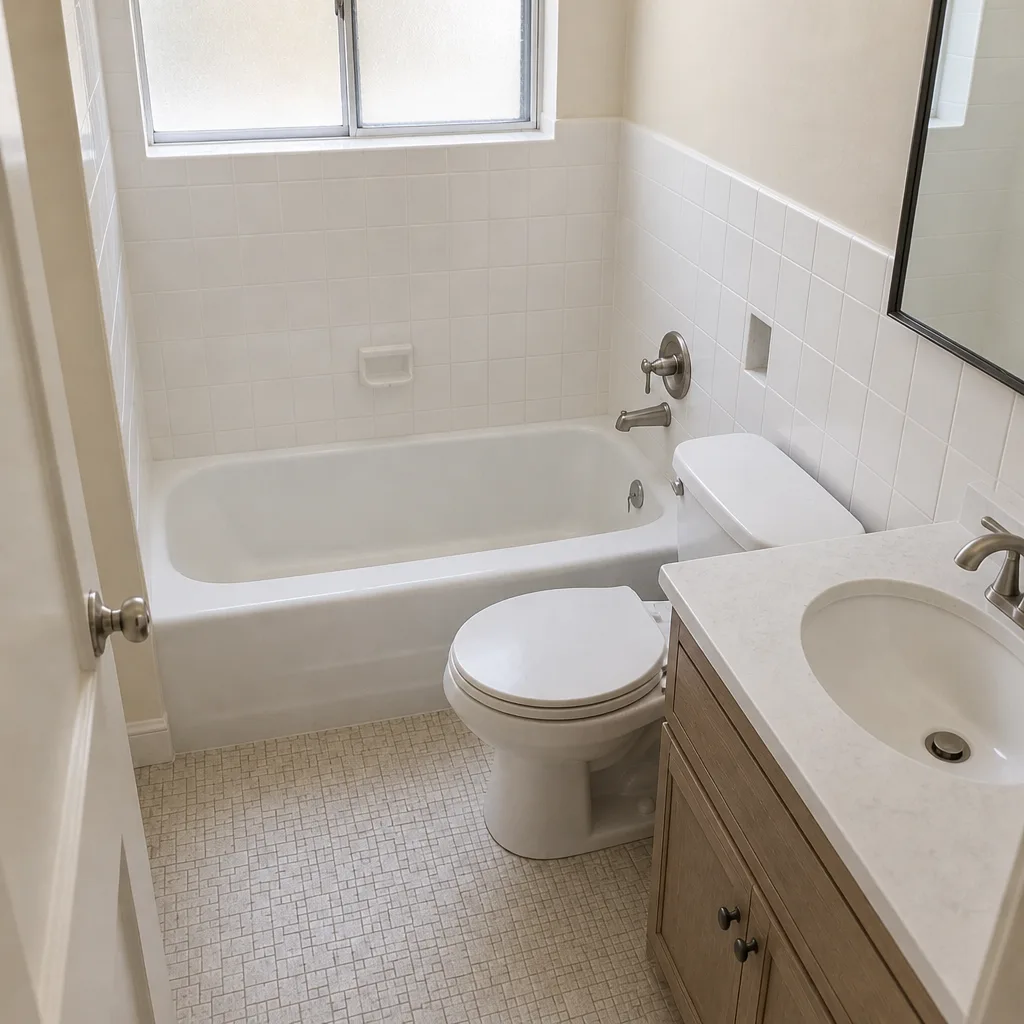
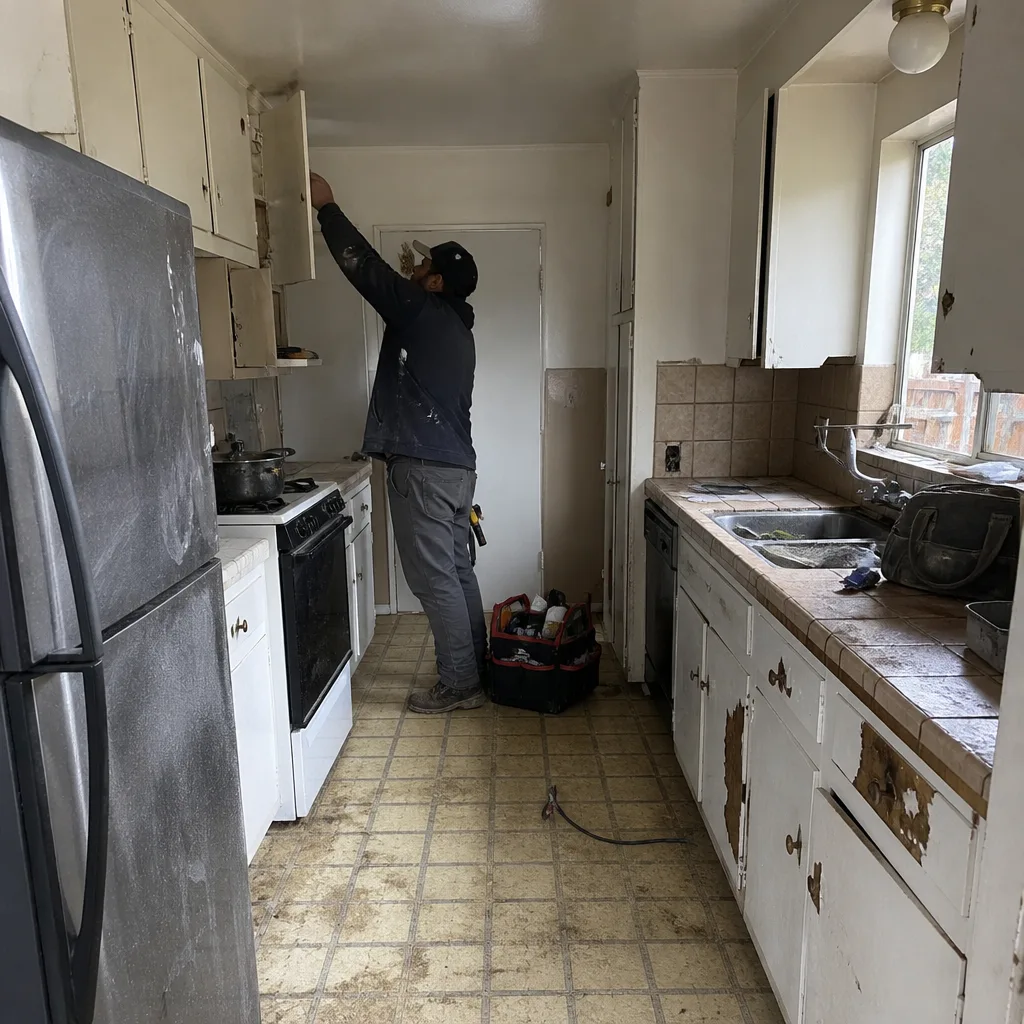
See the difference
 Before
 After
 Before
 After
 Before
 After
When to Call a Professional
Some seasonal care is a homeowner job. Some isn’t, and knowing the difference protects both the house and the person on the ladder. Call a professional if you see water staining on any ceiling or interior wall, if flashing or skylights show movement, if stucco is soft or bubbling, if a fence post has tilted, if a paver section has settled more than half an inch, or if any exterior work involves more than a single-story reach. Roofing, drainage correction, and stucco repair all fall firmly in this category. Construction Sunnyvale offers free estimates in Sunnyvale. Call (888) 255-9137. We answer 24/7. Fast dispatch from 7am to 7pm, Sunday through Friday.
Frequently Asked Questions

Late September, before the first significant rain. Clearing gutters, confirming drainage grades, and inspecting roof flashing in that window catches most water-intrusion risks while they’re still small. September is when the dry season’s wear on sealants and the year’s leaf load combine, and one careful week of prep prevents most of what goes wrong in January.
Twice a year: once in late September before the wet season and once in March after it ends. A roof that looks fine from the ground can have flashing failures at sidewalls and penetrations that only show up under heavy rain. If a shingle roof is past its service life, seasonal patching stops being worth it. Call (888) 255-9137 for a free estimate on a replacement assessment, and we’ll tell you honestly which is the smarter spend.
If it’s asphalt, yes, periodically. Sunnyvale’s dry season breaks down the surface binder through UV exposure, and once it’s unprotected, water can get in during the wet months and worsen the damage. Water should bead on a healthy surface. If it soaks in, it’s time. If the driveway is at the end of its life, our driveway & pavers work covers replacement with proper base construction.
Spring and fall are the best windows in Sunnyvale, when the ground is workable and temperatures aren’t stressing the set of the posts. Fencing can be installed in most conditions, but the footing is where a fence lives or dies. Getting the setting right matters far more than the calendar. Call (888) 255-9137 to schedule a free estimate.
Interior water stains on ceilings and walls facing the weather, soft or bubbling stucco, peeling paint, gaps at caulk joints, settlement along flatwork, and fence posts that have loosened at the soil line. Any of those warrant a professional look before summer, because dry weather makes the problem look smaller without fixing it. If you’re not sure what you’re seeing, call (888) 255-9137 and we’ll walk it with you.
Yes, and it’s often smarter to do so. Bundling exterior work means one schedule, one set of material decisions, and one team coordinating the order of work (roof first, then drainage, then fencing and flatwork, is the usual sequence). It also keeps a single contractor accountable across the whole exterior. Call (888) 255-9137 for a free multi-trade estimate.
The Bottom Line
Sunnyvale homes don’t need dramatic weather to take damage. They need time, sun, and a wet season that finds every gap the dry season opened. The fix is a calendar that fits this climate: a careful prep in late September, a thorough inspection in late March, and the small repairs in between done before they become big ones. That framework alone will keep a roof, walls, fence, and driveway in service far longer than waiting for something to fail. If any part of that calendar is beyond a weekend’s reach, get someone qualified to look. Construction Sunnyvale offers free estimates, and we cover the work from the roof down to the driveway. Call (888) 255-9137. We answer 24/7. Fast dispatch from 7am to 7pm, Sunday through Friday.
Written by the team at Construction Sunnyvale.